
Views: 0 Author: Site Editor Publish Time: 2025-07-04 Origin: Site


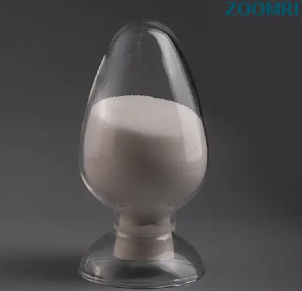
Anionic polyacrylamide (APAM) is a water-soluble, high molecular weight polymer that has earned a reputation as one of the most versatile and effective flocculants available today. While widely recognized for its applications in wastewater treatment and mining, APAM also plays a critical role in the construction industry, particularly for managing and treating piling mud on building sites.
Construction sites that rely on piling—whether for foundations, retaining structures, or soil stabilization—produce large volumes of slurry-like mud. Efficiently handling this mud is not only essential for keeping operations on schedule and within budget but also for complying with increasingly strict environmental regulations. Here, anionic polyacrylamide proves invaluable, offering a high-performance solution that ensures cleaner water discharge, easier mud disposal, and safer, more sustainable construction practices.
During piling operations, drilling into soil mixes water with clay, silt, sand, and sometimes even rock particles, forming a slurry known as piling mud. This mud typically exhibits:
High solids concentration, with fine particles remaining suspended for long periods.
Elevated viscosity, making it difficult to pump, transport, or settle naturally.
Significant water content, which complicates disposal and increases haulage costs.
If not properly treated, piling mud poses multiple problems:
Environmental compliance risks: Discharging untreated slurry into municipal sewers or nearby water bodies can lead to fines and site shutdowns due to high turbidity and pollutant loads.
Operational delays: Excess waterlogged mud can disrupt ongoing site work, leading to costly downtime.
Increased disposal costs: Transporting and disposing of large volumes of water-laden mud is both expensive and inefficient.
Thus, construction projects increasingly turn to chemical solutions like Anionic polyacrylamide to manage these challenges effectively.
Anionic polyacrylamide (APAM) plays a crucial role as a flocculant by fundamentally changing the physical behavior of piling mud. It does this through two primary mechanisms that work hand in hand to turn problematic slurry into manageable waste:
Adsorption bridging: APAM molecules are long polymer chains dotted with active sites that readily adsorb onto the surfaces of fine particles suspended in the slurry. As these chains stretch through the liquid, they attach to multiple particles at once, effectively creating bridges. This process gathers the dispersed fine solids into much larger aggregates known as flocs, which are heavy enough to settle quickly under gravity.
Charge neutralization: Most particles found in piling mud—such as clays and silts—carry a slight positive surface charge. Meanwhile, APAM is characterized by negatively charged functional groups along its molecular backbone. When introduced into the mud, these negative sites neutralize the positive charges on the particles, reducing their natural tendency to repel each other. This charge neutralization allows the particles to come closer together and bond, strengthening the flocculation process initiated by bridging.
The combined action of bridging and charge neutralization leads to the rapid formation of dense, robust flocs that separate easily from the water phase, dramatically speeding up the sedimentation process.
By gathering fine particles into larger clusters, APAM delivers multiple practical benefits that directly improve the handling and disposal of piling mud:
Reduced slurry viscosity: Once fine particles are aggregated into larger flocs, there are fewer free particles to contribute to the mud’s thickness. This results in a noticeably lower viscosity, making the slurry easier to pump, transport, and process through dewatering equipment.
Accelerated settling: The larger, heavier flocs formed by APAM settle rapidly under gravity, allowing for quicker separation of solids from water in settlement tanks or pits. This minimizes retention times and supports continuous, efficient operations on construction sites.
Clearer supernatant water: With the solids effectively removed, the water above the settled mud becomes significantly clearer. This cleaner water can often be recycled directly for drilling or washing purposes on-site, or discharged in compliance with environmental regulations, thereby reducing the demand for fresh water and lowering overall site water costs.
When added to piling mud, anionic polyacrylamide quickly forms flocs that drop to the bottom of settlement tanks or pits. This dramatically shortens settling times compared to untreated mud, which might take hours or even days for solids to separate. The water above the settled mud becomes significantly clearer, often meeting turbidity standards for reuse in drilling operations or for compliant discharge.
Treated mud is more compact, with reduced water content. This means:
Fewer truckloads are required for off-site disposal, slashing transport costs.
The drier consistency makes mud easier to handle with excavators and loaders, improving site logistics.
Cleaner, quicker mud treatment minimizes the risks of accidental overflows or runoff that could contaminate nearby storm drains or natural water bodies. This helps contractors meet environmental regulations and avoid penalties, while also maintaining a cleaner, safer work environment for crews.
It’s essential to prepare anionic polyacrylamide solutions correctly for piling mud applications. Never add APAM powder directly into the mud—it won’t disperse properly and will perform poorly. Instead:
Pre-dissolve APAM in clean water to create a stock solution. A typical preparation concentration is 0.1% to 0.3% (i.e., 1–3 grams of polymer per liter of water).
Use moderate-temperature water (below 40°C) to avoid degrading the polymer, and stir gently to protect the long molecular chains.
Allow the solution to fully hydrate, usually taking 30–60 minutes, to achieve the best performance.
Dose the prepared solution into the mud stream using a controlled feed system, such as a dosing pump, to ensure even distribution.
Mix the mud gently after dosing to encourage uniform contact between APAM and suspended particles.
Perform jar tests beforehand to determine the optimal polymer type and dosage for the specific soil composition and slurry conditions on-site. This prevents overdosing, which can lead to higher costs and sometimes even destabilize flocs.
By following these practices, contractors can achieve reliable and efficient mud treatment results.
In a major city center project involving deep foundations for a high-rise building, the contractor faced challenges managing high-viscosity clay slurry. By introducing an anionic polyacrylamide solution into the circulation pits:
Settling time dropped from 6 hours to under 30 minutes.
The volume of mud hauled off-site decreased by 40%, cutting disposal costs dramatically.
Clear water was recycled directly back into the drilling process, reducing freshwater consumption.
A bridge project required careful management to prevent muddy runoff into a nearby river. With APAM treatment:
Treated mud settled quickly in containment ponds, keeping site water within turbidity limits.
The project passed all regulatory water quality inspections, avoiding delays and fines.
Anionic polyacrylamide is a standout solution for managing piling mud on construction sites. Its ability to rapidly form strong flocs greatly accelerates the settling of fine particles, cuts slurry viscosity, and delivers cleaner water. This means faster, more reliable mud treatment, reduced transport and disposal costs, and safer sites that meet strict environmental standards. By properly dissolving APAM and fine-tuning dosage through simple on-site tests, contractors achieve top efficiency while controlling costs. For construction firms aiming to boost productivity, protect the environment, and ensure full compliance, anionic polyacrylamide remains the trusted choice. To explore high-quality APAM products and tailored solutions, visit Zoomri or contact their team for expert guidance.
 苏公网安备 32100302010854号


