
Views: 0 Author: Site Editor Publish Time: 2025-06-20 Origin: Site


Mineral processing is a critical phase in the mining industry, involving the extraction and purification of valuable minerals from raw ore. This complex process often requires the use of chemical agents to improve separation efficiency and reduce environmental impact. Among these chemicals, Cationic Polyacrylamide (CPAM) stands out as a highly effective flocculant and sedimentation aid. CPAM enhances the aggregation of fine suspended particles in slurry, thereby facilitating easier solid-liquid separation.
In modern mining operations, achieving effective flocculation and sedimentation is essential. These processes not only improve mineral recovery but also optimize water usage and tailings management.
Mining processes inevitably generate large volumes of slurry—a complex mixture consisting of water and finely ground ore particles. These fine particles, often microscopic in size, tend to remain suspended in the water for extended periods due to their small size and surface properties. The challenge lies in efficiently separating valuable minerals from the surrounding waste material, which is critical for optimizing mineral recovery and ensuring environmentally responsible disposal of tailings.
One major reason these particles remain suspended is their electrostatic behavior. Suspended solids in slurry typically carry negative surface charges, which cause them to repel each other. This repulsion prevents particles from coming together, resulting in poor settling rates and inefficient filtration processes. Consequently, the separation of solids from liquid phases becomes more difficult, leading to increased operational costs and potential environmental issues due to the discharge of poorly treated slurry.
Cationic Polyacrylamide(CPAM) is specifically engineered to address these issues. As a highly effective flocculant, CPAM molecules contain positively charged groups that strongly attract and neutralize the negative charges present on fine particles. This charge neutralization drastically reduces the repulsive forces between particles and encourages their aggregation. The result is the rapid formation of larger, denser flocs that settle faster and compact more efficiently during sedimentation and filtration.
In mining operations, CPAM is widely applied to both tailings and concentrate streams. Tailings, which are the leftover waste materials after valuable minerals are extracted, often contain a high concentration of fine particles that complicate solid-liquid separation. When CPAM is added to tailings ponds, it accelerates sedimentation by promoting the formation of robust flocs, leading to improved water clarity. This enhanced settling not only facilitates better water recovery for reuse in the processing plant but also reduces the environmental impact of tailings discharge.
Similarly, in concentrate streams where the focus is on recovering valuable minerals, CPAM enhances the thickening and dewatering processes. By improving flocculation, CPAM produces a higher-quality mineral concentrate with lower moisture content, increasing the efficiency and profitability of mineral recovery operations.
One of the most critical and challenging aspects of mineral processing is the effective management and disposal of tailings—these are the fine-grained residues left behind after the valuable minerals have been extracted from the ore. Tailings typically consist of a slurry of water, finely ground rock particles, and residual chemicals, which pose significant environmental and operational risks. Improper handling and disposal of tailings can lead to serious consequences such as groundwater contamination, toxic seepage, and catastrophic tailings dam failures. Therefore, efficient dewatering of mine tailings is essential for reducing their volume, improving the stability of storage facilities, and minimizing the overall environmental footprint of mining operations.
Cationic Polyacrylamide (CPAM) plays a pivotal role in overcoming these challenges. By acting as a powerful flocculant, CPAM promotes the formation of large, dense flocs that enable the suspended solids in tailings slurry to settle rapidly and consolidate into thick, compact layers. This flocculation effect significantly enhances the performance of mechanical dewatering equipment commonly used in mining, such as filter presses, centrifuges, and belt presses. The use of CPAM results in more efficient separation of water from solids, producing a thicker and drier tailings cake.
Beyond improving solid-liquid separation, CPAM also contributes to increased water recovery. The water reclaimed from tailings slurry can be recycled and reused within the mineral processing circuit, substantially lowering the demand for freshwater—a critical sustainability objective in today’s mining industry. This recycling not only conserves valuable water resources but also reduces the volume of wastewater discharged into the environment.
Moreover, the improved dewatering enabled by CPAM facilitates better tailings handling and disposal. Thicker, drier tailings cakes are easier to transport, stabilize, and store safely, which in turn reduces the risk of dam breaches and environmental contamination. These stable tailings deposits support safer storage solutions, contribute to efficient site rehabilitation, and lower long-term environmental liabilities for mining companies. Overall, CPAM is an indispensable additive that helps mining operators achieve safer, more sustainable tailings management practices while optimizing operational costs.
The versatility of CPAM is evident in its wide application across different mineral types, each presenting unique processing challenges.
Coal Washing: In coal preparation plants, the removal of impurities such as clay, shale, and fine mineral matter is essential for improving fuel quality. CPAM aids in flocculating suspended solids and organic matter, enhancing the efficiency of thickening and dewatering operations. This leads to cleaner coal products and reduced moisture content.
Iron Ore Processing: Iron ore beneficiation often involves fine particles that are difficult to settle. CPAM promotes rapid aggregation of iron fines, facilitating improved thickening and filtration. This ensures higher concentrate grades and better recovery rates while minimizing tailings volume.
Non-Metallic Minerals: Minerals such as kaolin, talc, and limestone often require fine particle separation in their processing stages. CPAM helps remove organic impurities and ultrafine particles, improving product clarity and quality. For example, in kaolin processing, CPAM improves sedimentation and clarifies process water, enabling effective recycling.
Across all these applications, CPAM’s tailored charge density and molecular weight can be optimized to suit specific mineral characteristics and processing conditions, ensuring maximum performance.
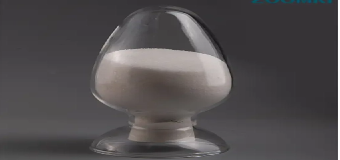
The integration of Cationic Polyacrylamide into mineral processing workflows delivers several key operational advantages:
Reduction in Water Consumption: By enhancing sedimentation and flocculation, CPAM facilitates more effective recycling of process water. This decreases dependency on freshwater sources, lowering operational costs and supporting sustainable mining practices.
Lowering Operating Costs: Efficient flocculation and dewatering reduce the energy consumption of mechanical equipment and decrease the volume of sludge requiring disposal. This translates into savings on power, chemicals, transportation, and landfill fees.
Environmental Footprint: CPAM contributes to greener mining by improving tailings management and reducing the environmental impact of slurry discharge. Reduced water usage and more stable tailings storage facilities help mining companies comply with increasingly stringent environmental regulations.
Improved Process Efficiency: Faster settling times and improved sludge handling increase overall plant throughput. The enhanced clarity of process water reduces the risk of equipment fouling and downtime, ensuring smoother and more reliable operations.
Cationic Polyacrylamide (CPAM) plays a crucial role in the mining industry by significantly enhancing flocculation, sedimentation, and dewatering of mineral slurries. Its unique ability to neutralize particle charges and form large, dense flocs leads to improved mineral recovery, more efficient tailings management, and notable operational cost savings. As the mining sector increasingly prioritizes sustainability and resource efficiency, the demand for advanced additives like CPAM is growing rapidly.
For mining operators seeking to optimize their processes while minimizing environmental impact, CPAM offers a powerful, eco-friendly solution. To explore the full potential of Cationic Polyacrylamide and how it can transform your mineral processing operations, we recommend contacting Zoomri—a trusted industry expert specializing in high-quality CPAM products and tailored technical support. Visit Zoomri’s website or reach out directly to learn more about their innovative solutions designed to meet today’s green mining challenges.
 苏公网安备 32100302010854号


